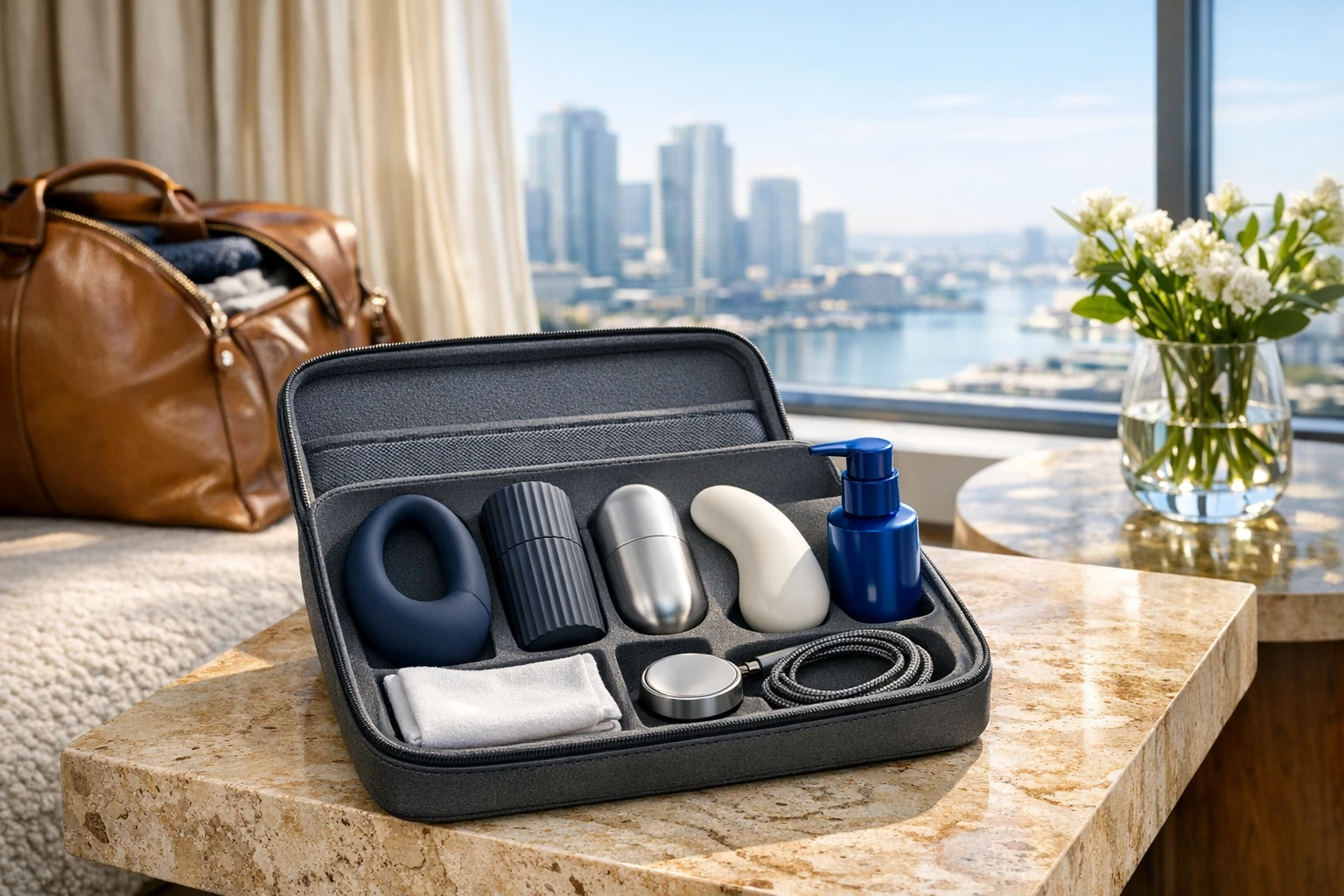
Men’s Performance Device Guide for Pleasure: Types and Usability
Shopping for a pleasure device can feel a lot like buying headphones: there are endless models, glossy claims, and very little guidance about what will actually suit your body and habits. Men now have access to rings, sleeves, strokers, vibrating tools, pumps, and app-linked devices aimed at comfort, novelty, or better control. Yet usability matters more than excitement, because poor fit, awkward controls, or fussy cleaning can quickly ruin the experience. This guide breaks the subject into clear categories so you can compare options with realistic expectations.
Article outline:
- Main types of men’s performance devices and what they are designed to do
- Materials, fit, ergonomics, and the features that affect everyday usability
- Safety, hygiene, lubrication, and practical care routines
- How to match a device to your goals, preferences, budget, and lifestyle
- A conclusion focused on first-time buyers and men looking for a more informed upgrade
1. Understanding the Main Types of Men’s Performance Devices
The phrase “performance device” can be misleading because it suggests a single goal, usually stamina or firmness. In reality, the category is broader and more practical. Some products are designed to intensify sensation, some aim to reduce hand fatigue, some add variety for solo use, and others are made to fit naturally into partnered intimacy. Thinking in terms of purpose rather than promises is the best way to start.
One of the simplest categories is the ring-style device, often worn at the base. These products are usually small, relatively affordable, and easy to store. Adjustable versions can be more forgiving for beginners, while fixed-size options may feel more secure if the sizing is correct. Their appeal lies in simplicity: low setup time, few controls, and a straightforward learning curve. The downside is that comfort depends heavily on fit, and overly tight designs can become unpleasant quickly.
Sleeves and strokers form another major group. These range from soft, manual designs to motorized or automated models. Manual versions are often cheaper, quieter, and easier to understand at first use. Automated versions can offer more consistency and reduced effort, but they also tend to cost more, require charging, and add extra cleaning steps. In practice, this category suits men who want texture variety, different pressure levels, or a more immersive experience without relying only on manual technique.
Vibrating devices sit in a different lane. Some are compact external stimulators, while others are integrated into sleeves or ring-based products. Their main strength is versatility. A device with several settings can shift from gentle background stimulation to a more focused, rhythmic feel. For some users, that flexibility matters more than raw intensity. It is a bit like choosing lighting for a room: the brightest bulb is not always the best one, and control can matter more than power.
Then there are vacuum-style devices and enhancement products marketed around fullness or temporary performance support. These should be approached carefully and realistically. Some users enjoy them for short-term sensation or novelty, but they are not a magic solution and should never be treated as a replacement for medical advice if someone has an underlying concern. Pressure limits, duration, and instructions matter far more here than with simpler products.
A useful way to compare categories is to ask a few plain questions:
- How much setup time does it require?
- How easy is it to clean and dry thoroughly?
- Does it rely on power, charging, or an app?
- Is it discreet in terms of size and noise?
- Does it seem suited to your real habits, not just your curiosity?
For most men, the best first device is not the most advanced model on the market. It is the one whose purpose is clear, whose controls make sense, and whose upkeep does not become a chore after the novelty fades.
2. Materials, Fit, and Ergonomics: Where Usability Really Begins
If categories tell you what a device does, materials and ergonomics tell you whether you will actually want to use it more than once. This is where many purchases succeed or fail. An impressive product page may highlight modes, patterns, or futuristic design, but a slippery grip, awkward button layout, or difficult cleanup routine can outweigh all of those features. In the world of adult wellness, usability is not a luxury feature. It is the feature.
Silicone is widely preferred for many pleasure devices because it is durable, non-porous when properly manufactured, and generally easy to clean. It often feels smoother and more premium than softer blends. ABS plastic is common in external shells and control panels because it is rigid, sturdy, and pairs well with motors. TPE and TPR materials can feel plush and realistic, but they are often more porous and may need extra care depending on the product’s design. Metal and glass appear in some premium devices, usually for weighted sensation, temperature play, or a more durable finish, though they are less common in mainstream men’s products focused on convenience.
Fit matters just as much as material. A sleeve that is too narrow may feel uncomfortable instead of stimulating. A ring that is too tight is not “more effective”; it is simply a poor fit. A device that is too large or too rigid may be harder to position naturally, especially for beginners. This is why dimension charts, internal canal width, adjustable sizing, and stretch characteristics deserve more attention than flashy packaging. If a listing skips the measurements entirely, that is usually not a good sign.
Ergonomics also deserve a closer look. Consider:
- Button placement: Can you adjust settings without fumbling?
- Grip texture: Will it slip when lubricant is involved?
- Weight: Is it light enough for longer sessions without strain?
- Noise: Can it be used discreetly in a normal home setting?
- Water resistance: Is it splash-proof or fully waterproof for easier washing?
Rechargeable models are often more convenient over time than battery-powered devices, but charging ports, cable types, and battery life differ a lot. A product with strong battery life and simple charging can be more satisfying than one with dozens of settings and constant downtime. Likewise, removable internal sleeves can make cleaning easier, while sealed all-in-one units may be tidier to store but harder to dry thoroughly.
There is also the matter of control style. Some men prefer one-button simplicity, while others enjoy devices with multiple patterns and app control. Neither is automatically better. A traveler who wants discretion may value compact size and quiet operation. A curious home user may prefer a larger model with more features. The point is to match design to lifestyle. The right device should feel less like a puzzle and more like a tool that quietly fits into your routine.
3. Safety, Hygiene, and Lubrication: The Rules That Matter Most
No guide on pleasure devices is complete without a serious look at safety and care. This may not be the most glamorous part of the conversation, but it is the part that separates a good experience from an avoidable problem. The basic principle is simple: if a device touches sensitive skin, it should be used gently, cleaned correctly, and paired with the right lubricant. The details are not complicated, yet they matter.
Lubrication is the first practical decision. Water-based lubricant is usually the safest all-round choice because it works well with most materials and is easy to clean. Silicone-based lubricant lasts longer and can feel smoother, but it may not be compatible with some silicone products unless the manufacturer specifically says it is safe. Oil-based lubricants can be harder to wash off and may not be suitable in situations where latex barriers are involved. When in doubt, a quality water-based option is often the most versatile starting point.
Cleaning routines should be based on the product’s material and construction. Non-porous surfaces are generally easier to sanitize. Textured interiors, seams, and removable inserts often need extra attention. A quick rinse is rarely enough for products with deep channels or detailed textures. Most devices can be cleaned with warm water and a mild cleanser made for body-safe materials, then dried fully before storage. Moisture trapped inside a case or sleeve can create odor and shorten the product’s lifespan.
There are a few safety habits worth treating as non-negotiable:
- Read the instructions before first use, especially for sizing and time limits.
- Stop immediately if you feel pain, numbness, pinching, or unusual discomfort.
- Do not exceed recommended wear times for rings or pressure-based devices.
- Store products in a clean, dry place away from lint, dust, and direct heat.
- Inspect motors, seams, charging ports, and outer surfaces for wear over time.
Pressure-based devices deserve special caution. More intensity does not always mean a better result. Gradual use is smarter than aggressive experimentation, especially with products marketed around temporary enhancement. If a device leaves prolonged discomfort, bruising, or irritation, it is not being used correctly or it is not suitable for you. That is a clear signal, not something to push through.
Hygiene also overlaps with practicality. A product that is a hassle to clean often gets cleaned less carefully, which is one more reason simple designs can be a better first buy. If a device includes sleeves, caps, or inner chambers, ask yourself whether you can realistically maintain it after a long day. Adult wellness products are at their best when they are both pleasurable and low-friction to care for.
Finally, keep expectations grounded. Pleasure devices can add variety and comfort, but they are not substitutes for professional medical care if pain, persistent performance changes, or circulation concerns are involved. A smart buyer looks for enjoyment and safety together, not one at the expense of the other.
4. Matching Device Types to Your Goals, Budget, and Lifestyle
Choosing the right device becomes much easier when you stop asking, “What is the best one?” and start asking, “What do I actually want from this?” The answer is different for everyone. Some men want more variety in solo sessions. Some want less reliance on repetitive hand pressure. Some want a discreet product that fits in a drawer without looking like a piece of sci-fi equipment. Others want something that can be used in a partnered setting without adding complexity or awkward setup. Goals shape good purchases.
If your main aim is sensory variety, sleeves, textured strokers, and vibrating models are often the most obvious starting points. They offer different pressure levels, internal patterns, and rhythms without demanding a lot of technical knowledge. If your goal is convenience, look for a model with simple controls, a removable insert, and a fast cleaning routine. If you are drawn to experimentation, a device with multiple settings may be more satisfying than a single-function product.
For men interested in pacing or stamina-oriented use, realistic framing matters. No pleasure device can guarantee a particular outcome, and marketing language should be treated with caution. What some products can do is help you change sensation, reduce routine, or introduce a different pace that makes sessions feel less automatic. That can be useful, but it is not the same as a promised transformation. Sleep, stress, comfort, and confidence still play a major role.
Budget matters more than many buyers admit. A higher price can bring stronger motors, better materials, quieter operation, or waterproofing, but spending more does not always create a better match. Sometimes a simple, well-made manual device is more satisfying than an expensive model with too many features. A helpful way to think about it is to divide products into three practical tiers:
- Entry level: basic rings, simple sleeves, manual strokers, limited features
- Mid range: improved materials, better ergonomics, quieter motors, easier cleaning
- Premium: app control, advanced settings, stronger build quality, more refined design
Lifestyle considerations matter too. If discretion is important, prioritize quiet motors, compact storage, and neutral packaging. If you travel often, lightweight rechargeable products can be easier to manage than bulky units. If you share a home, noise level and storage design may matter more than one extra vibration mode. If you plan to use a device with a partner, communication matters just as much as product choice. The best tool is the one both people understand and feel comfortable incorporating.
In short, the “right” device is less about chasing the most intense option and more about finding a comfortable fit between body, budget, and routine. A good purchase feels natural to return to. A bad one becomes an expensive object in the back of a drawer, quietly losing to convenience every time.
5. Conclusion: A Smarter Buying Strategy for First-Time and Returning Users
If you are new to men’s pleasure devices, the smartest move is to begin with clarity rather than ambition. Decide whether you want simplicity, variety, enhanced sensation, lower effort, or a more partner-friendly experience. That one decision narrows the field more effectively than any advertisement can. A compact ring, a well-reviewed sleeve, or an easy-to-clean vibrating device is often a better first step than a feature-heavy machine loaded with options you may never use.
Returning users can benefit from the same logic. If you have already tried a product and left it untouched after a few sessions, ask why. Was it difficult to clean? Too noisy? Too large? Did the material feel cheap, or was the fit off? Those answers are valuable because they point toward a better second purchase. In this category, learning what you dislike is often as useful as learning what you enjoy.
A practical buying checklist helps keep things grounded:
- Choose a clear purpose before browsing products
- Check materials, dimensions, and care instructions carefully
- Prefer body-safe, well-documented construction over vague descriptions
- Read reviews for comments on noise, comfort, and cleaning, not just intensity
- Start with a manageable budget and upgrade only when you know your preferences
It is also worth remembering that pleasure works best when curiosity is paired with patience. The first experience with a new device may feel unfamiliar simply because it is new, not because it is wrong. A little time, the right lubricant, and a realistic setup can make a major difference. At the same time, no one should force a product into their routine out of sunk-cost thinking. If something feels awkward, uncomfortable, or needlessly complicated, it is perfectly reasonable to move on.
For men shopping in this space, the goal is not to chase a fantasy version of performance. The more useful goal is to find a device that supports comfort, confidence, and enjoyable variety without creating extra hassle. When you focus on purpose, fit, safety, and usability, the category becomes much less confusing. Instead of being a wall of shiny promises, it becomes what it should have been all along: a set of tools, each with strengths, limits, and a place for the right user.