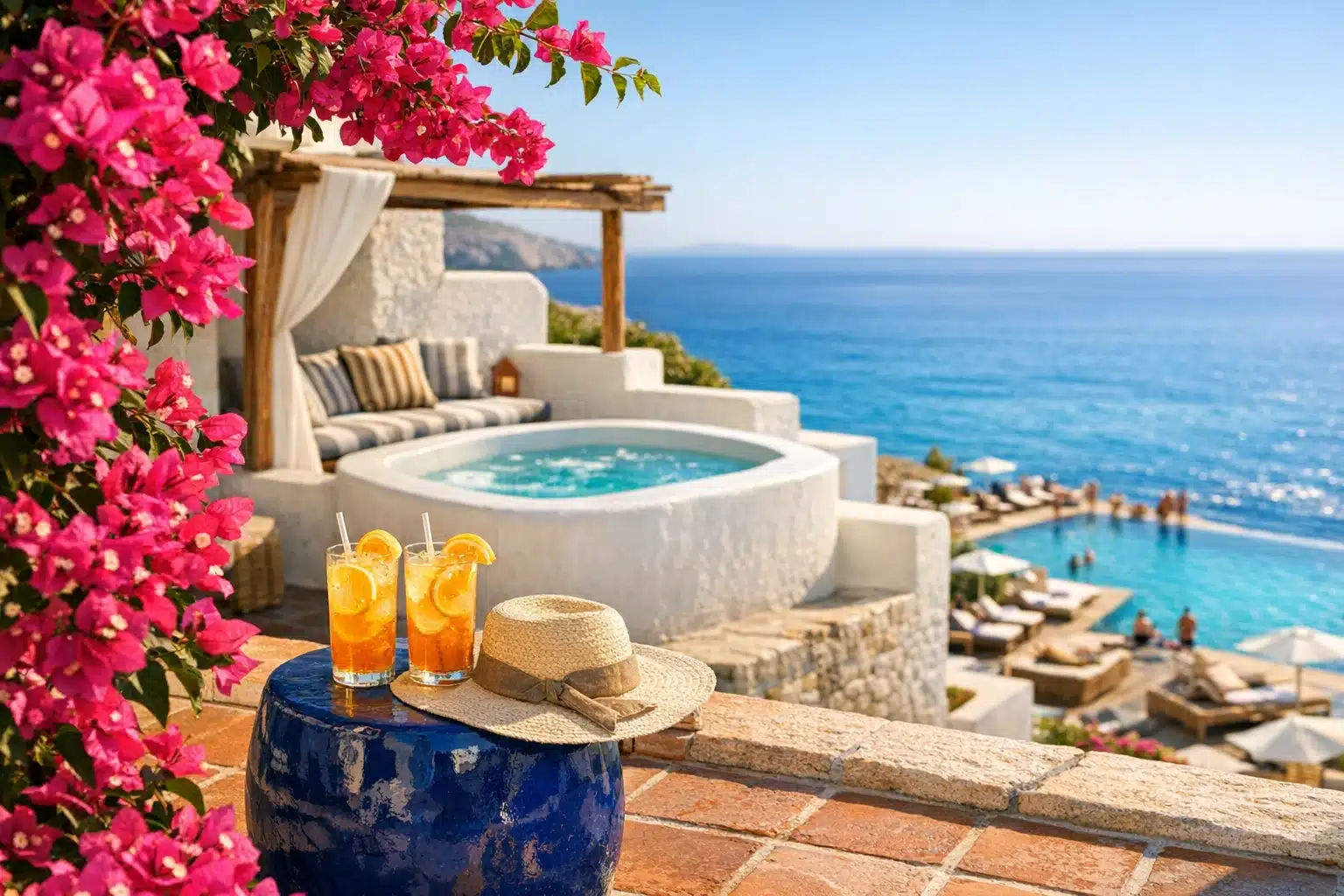
 Artificially generated image
 Luxury Hotel Rooms with Hot Tubs: Are They Worth the Upgrade?
Upgrading from a standard room to a luxury hotel suite with a private hot tub can feel like a small indulgence or a meaningful shift in how a trip unfolds. For couples, worn-out business travelers, and weekend escape artists, that extra amenity changes the rhythm of a stay by turning downtime into part of the experience. Yet higher rates, cleaning policies, and space limitations complicate the decision. This guide breaks the choice down in practical terms so you can book with confidence.
Article Outline
- What a hot tub suite actually changes compared with a standard room
- How spa comfort affects rest, mood, and the overall feel of a stay
- Where privacy shines and where practical drawbacks appear
- Smart booking tactics that help travelers judge value before paying more
- Which guests benefit most from the upgrade, and when it makes sense to skip it
1. What a Hot Tub Suite Really Adds to a Hotel Stay
A luxury room with a hot tub is often marketed as a symbol of indulgence, yet its real value is more specific than the brochures suggest. It is not simply about having extra water features in a larger room. The upgrade changes how you use time, how you rest between activities, and how private your downtime feels. In a standard room, relaxation is usually passive: a bed, a chair, perhaps a compact bathroom, and a television humming in the background. In a hot tub suite, relaxation becomes active. You are no longer just staying somewhere; you are shaping an experience inside the room itself.
That distinction matters most on short trips. When travelers only have one or two nights away, every hour becomes more valuable. A private hot tub can replace the need to book a spa circuit, find an off-site wellness center, or share a crowded pool area with other guests. It can also make a rainy afternoon feel less like lost vacation time and more like part of the plan. That is why the upgrade often feels more dramatic on a weekend trip than on a weeklong stay filled with sightseeing.
Still, not every property delivers the same level of luxury. Some hotels place a whirlpool tub beside the bed and call it a suite, while others offer a separate lounge area, upgraded linens, better sound insulation, larger bathrooms, and premium views. The difference between these room types can be substantial, which is why travelers should look beyond the words “hot tub” and “suite” when comparing options.
Useful details to check include:
- Whether the tub is fully private or part of a semi-open bathroom layout
- If the room includes a true suite plan with separate sitting space
- Whether the upgrade comes with better views, club access, or late checkout
- If the tub is indoors, outdoors, or on a terrace with weather exposure
The strongest case for the upgrade appears when the room itself is meant to be part of the trip. Anniversary travelers, winter weekend guests, and people booking a quiet retreat often spend far more time in the room than city explorers rushing between museums and dinner reservations. In that context, the suite is not a decorative extra. It becomes a functional part of the travel plan, and that is the lens through which value should be judged.
2. Spa Comfort, Mood, and the Appeal of Slowing Down
The emotional pull of a hot tub suite comes from something many modern trips fail to provide: unstructured comfort. Travel can be exciting, but it is also noisy, scheduled, and full of small frictions. You queue, check in, carry bags, adjust to a new bed, and manage unfamiliar surroundings. A private soaking space softens that transition. It creates a pause button. Step into warm water after a late flight or a day of walking through a city, and the room suddenly feels less temporary. It begins to feel inhabitable.
This is where the spa comparison becomes useful. Traditional hotel spas offer treatments, saunas, steam rooms, and dedicated wellness spaces, but they also require time slots, extra fees, changing areas, and public interaction. A hot tub suite offers a smaller, less formal version of that comfort. It will not replace a full-service spa for guests seeking professional treatments, yet it can deliver some of the same atmosphere: warmth, quiet, reduced muscle tension, and a sense that the trip includes care rather than just logistics.
Comfort also depends on context. In colder months, a warm soak feels especially rewarding after time outdoors. On romantic trips, the amenity can shape the mood of the evening without requiring a separate activity. For solo travelers, it can transform a work trip into something more restorative. There is a cinematic quality to it as well: city lights beyond the glass, a robe on the chair, steam lifting into a quiet room. Good hotels understand that feeling and design these suites around mood as much as function.
That said, comfort is not automatic. A poorly maintained tub, heavy chemical smell, awkward layout, or noisy neighboring room can flatten the effect quickly. Travelers should pay attention to room photos, maintenance comments in recent reviews, and whether the hotel has a reputation for cleanliness. Wellness features only feel luxurious when they are clearly cared for.
When the room is well designed, the benefits often include:
- A more restful evening routine after travel or sightseeing
- Less dependence on shared amenities during busy periods
- A stronger sense of retreat, especially on short breaks
- A better match for travelers who value downtime as highly as activity
The deepest appeal of spa comfort is not extravagance for its own sake. It is the chance to recover, breathe, and let the trip move at a human pace instead of a frantic one. For many guests, that shift is precisely what makes the upgrade memorable.
3. Privacy, Practical Trade-Offs, and the Cost of the Upgrade
Privacy is one of the strongest arguments in favor of a hot tub suite, but it is also one of the easiest features to misunderstand. A private tub sounds straightforward, yet privacy can mean several different things in practice. It may refer to not sharing a spa area with other guests. It may describe a room with a secluded terrace. Or it may simply mean a jetted bathtub within the room itself, without much acoustic separation from the hallway or neighboring units. That is why the upgrade deserves a more careful look than the listing headline alone provides.
For couples, privacy often adds emotional value. It allows a more intimate pace, removes the self-consciousness of communal pool settings, and gives guests control over timing. You do not need to reserve a slot, carry sandals to another floor, or worry about peak-hour crowds. For solo travelers, privacy can mean freedom from interruption. The room becomes a quiet pocket where recovery, reading, or simply doing nothing feels legitimate. In a travel culture that often celebrates constant movement, that kind of private stillness can be rare.
Yet privacy comes with trade-offs, and cost is the obvious one. Depending on destination, season, and hotel tier, a hot tub suite can add a noticeable premium over a standard room. In some markets, the jump may be modest if demand is soft. In others, especially resort areas during peak periods, the difference can be substantial. Travelers should ask themselves not whether the room is luxurious in theory, but whether they will truly use its standout amenity enough to justify the extra spend.
Other practical drawbacks deserve attention too:
- Some in-room tubs increase humidity, which can make compact rooms feel warm or stuffy
- Outdoor tubs may be less appealing in poor weather or highly visible settings
- Cleaning schedules and maintenance quality vary, affecting confidence and comfort
- Higher rates may reduce budget flexibility for dining, activities, or an extra night
In many cases, the best value emerges when privacy has clear personal importance. If you dislike crowded leisure spaces, want a romantic setting, or know you will spend the evening in the room, the premium often makes more sense. If your itinerary is packed from morning to midnight, that same upgrade may become a beautiful object you barely touch. Luxury is most convincing when it aligns with behavior, not fantasy. The smart traveler measures the dream against actual habits before clicking “reserve.”
4. Smart Booking Strategies: When to Pay More and How to Judge Value
Booking well matters almost as much as choosing well. Travelers sometimes decide that hot tub suites are overpriced when the real issue is timing, not the amenity itself. Hotel rates shift constantly according to demand, events, holidays, and length of stay. A room that feels unreasonable on a Saturday in peak season may look much more attractive on a Thursday in shoulder season. The same suite can move from splurge territory to surprisingly fair value with nothing more than a flexible date change.
The first step is to compare the total package, not just the room name. Some premium rooms include breakfast, parking, lounge access, or late checkout, all of which reduce other travel costs. If the upgraded room also saves you from booking a spa pass or premium activity elsewhere, the price gap may narrow further. By contrast, a basic “romance” room with a tub but no meaningful extras can be all style and little substance.
Compare comfort, privacy, and cost to decide whether a hot tub suite is the right upgrade for your next getaway.
That sentence works best as a practical booking filter. Instead of asking whether the suite looks impressive, ask whether it improves the stay in ways you personally value. Then verify the details before payment. Room categories can be vague, and photos often represent only the best version of the category rather than every identical unit.
Questions worth checking before you book include:
- Is the hot tub located inside the room, on a balcony, or in a private courtyard?
- Are all rooms in this category the same, or do layout and view vary?
- Does the hotel mention recent renovation dates for bathrooms and wellness features?
- What do recent reviews say about cleanliness, noise, and water temperature?
- Are cancellation terms flexible if the room does not meet expectations?
There are also timing tactics that tend to help. Midweek stays often offer stronger value than weekend nights in urban hotels. Shoulder seasons can deliver lower rates without sacrificing comfort. Longer stays sometimes unlock lower nightly averages, making the upgrade easier to justify. Direct booking may provide added perks, while comparison sites help reveal how wide the price spread is across dates and room categories.
Smart booking is not about gaming the system; it is about matching the rate to the experience. The goal is simple: pay more only when the extra spending buys time, comfort, and privacy you will genuinely use. When approached that way, the decision becomes less emotional and far more satisfying.
5. Conclusion: Who Should Book the Upgrade and Who Can Skip It
So, are luxury hotel rooms with hot tubs worth the upgrade? For the right traveler, yes. For everyone else, not automatically. The answer depends less on status and more on intention. If your trip is built around rest, closeness, or a slower rhythm, the suite can transform the stay from routine lodging into a compact retreat. If your plan revolves around business meetings, packed sightseeing, or quick overnight convenience, the money may be better spent elsewhere.
The most suitable guests usually fall into a few clear groups. Couples celebrating a milestone often value privacy and atmosphere enough to make the premium worthwhile. Solo travelers seeking a calm reset may appreciate the comfort more than a crowded public spa. Weekend guests on short escapes can benefit because the room itself becomes part of the entertainment. In each case, the upgrade earns its price by being used, not merely admired.
On the other hand, travelers should feel no pressure to upgrade simply because the listing looks glamorous. A standard room may be the smarter pick when:
- You will spend very little time at the hotel
- Your budget is better allocated to dining, local experiences, or transportation
- You prefer a full spa with professional treatments over in-room wellness features
- The hotel’s reviews raise doubts about maintenance or room quality
The key audience for this decision is not luxury seekers in the abstract. It is practical travelers who want comfort without waste. If that describes you, start with your habits. Do you really linger in your room? Do you enjoy quiet evenings more than crowded common spaces? Would a warm soak after a long day feel like the highlight of the stay rather than an afterthought? Honest answers matter more than marketing language.
In the end, a hot tub suite is worth the upgrade when it supports the kind of trip you actually want. Not louder, not grander, just better suited to your pace. Book it when privacy, comfort, and downtime are central to the plan. Skip it when the room is only a place to sleep. That is the simplest route to smart booking, satisfying luxury, and a getaway that feels chosen rather than oversold.