 Artificially generated image
 Hot Men’s Swimwear Trends 2026: Style, Comfort & Confidence
Summer style is no longer limited to picking a bright pair of trunks and hoping they work. In 2026, men’s swimwear sits at the crossroads of coastal ease, modern design, and practical comfort, making every choice more intentional. The right suit can sharpen proportions, handle salt, sun, and movement, and quietly improve how a man carries himself by the water. This guide explores the trends, materials, and styling decisions that turn a seasonal purchase into a smart wardrobe move.
Article Outline
- How coastal style is shaping men’s swimwear in 2026
- Which fabrics, cuts, and technical details matter most today
- How fit, color, and proportion influence summer confidence
- Ways to style swimwear beyond the beach without looking overdone
- A practical conclusion for men building a better warm-weather wardrobe
Coastal Style in 2026: Relaxed, Refined, and More Intentional
Coastal style has matured. Instead of leaning only on loud tropical prints or novelty motifs, the 2026 version borrows from shoreline architecture, sailing heritage, and relaxed resort dressing. Think sun-washed blues, mineral greens, sandy neutrals, faded terracotta, and crisp off-white rather than only neon brights. This shift matters because swimwear now plays a larger role in a broader summer wardrobe. Men are buying trunks that need to look good on the beach, at a marina café, during a walk through town, or under a linen shirt at a hotel terrace. In other words, the swim short is no longer an isolated item. It is part of a system.
That system works best when coastal style is understood as balance. A classic striped short can feel nautical without turning costume-like. A textured fabric can add character without demanding attention. A muted print inspired by waves, tile work, or coastal vegetation can look interesting from close range while still reading clean from a distance. The most successful looks in this category avoid two extremes: being so plain that the outfit disappears, or being so busy that the wearer looks trapped inside a trend cycle. Modern coastal style is calm, but it is not dull.
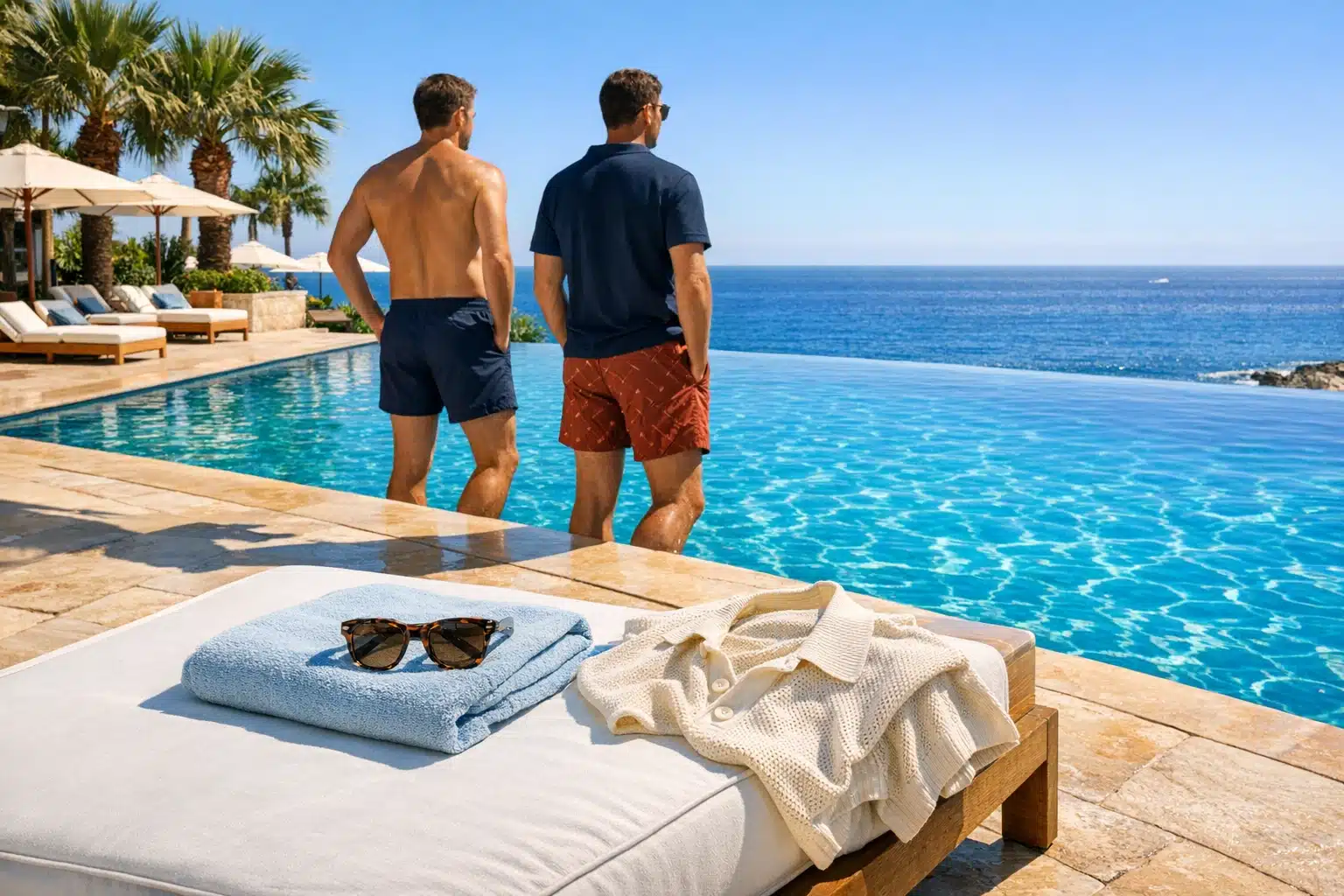
One reason this direction resonates is that it suits a wide range of ages and settings. A younger man might choose a shorter trunk in sea-glass green with a camp-collar shirt and molded sandals. Someone who prefers a more traditional look may wear a mid-length navy short with a knitted polo and leather slides. Both outfits live in the same visual world because the underlying language is shared: simplicity, texture, and a subtle nod to place. That is the appeal of coastal dressing when done well. It suggests ease, but it still feels considered.
There is also a practical explanation for the trend. Consumers increasingly want fewer seasonal impulse buys and more pieces that justify their place in a suitcase or closet. Swimwear that connects with coastal style tends to be easier to pair with other warm-weather staples. Good options often include:
- Solid colors that echo water, stone, and sand
- Patterns that stay legible without overwhelming the frame
- Trim details like contrast piping, side tabs, or matte hardware
- Fabrics with a soft hand feel instead of a shiny, stiff finish
The overall message is simple: coastal style in 2026 is not about dressing like a postcard. It is about creating a polished, natural look that feels at home near the water and still works once you leave it behind.
Modern Swimwear Design: Fabrics, Cuts, and Performance Details That Matter
The biggest improvements in men’s swimwear are happening where many people do not immediately look: in the fabric and construction. Modern trunks are expected to dry quickly, hold their shape, resist chlorine or salt damage, and remain comfortable after hours of wear. That has pushed brands and manufacturers toward technical blends such as recycled polyester with elastane or nylon with stretch content. A moderate amount of elastane, often around 10 to 20 percent depending on the design, helps a short move with the body rather than pulling against it. Recycled fibers are also becoming more common, partly because buyers are asking better questions about waste, durability, and long-term value.
Fit categories have evolved as well. Long board shorts still exist, especially for surfing and certain athletic uses, but they no longer dominate everyday swim style. Mid-length trunks, usually landing several inches above the knee, are now the most versatile option for many men. They create a cleaner line, work well on different heights, and transition more easily into casual daytime outfits. Shorter inseams, often around five inches, feel more fashion-forward and can look excellent when balanced with a simple top layer. Slightly longer inseams, around seven inches, tend to appeal to men who want a conservative but updated profile. The difference sounds minor on paper, yet visually it changes the entire silhouette.
Construction details also deserve attention because they often separate a good suit from one that ends up forgotten in a drawer. Useful features include:
- Mesh or compression-style linings that reduce chafing
- Secure pockets with drainage eyelets
- Flat seams that minimize rubbing during long wear
- Waistbands that combine elastic comfort with drawstring support
- UPF-rated fabrics, with UPF 50 blocking about 98 percent of UV radiation
Another modern shift is the rise of hybrid swim shorts. These are designed to move between swimming and dry-land use without looking obviously technical. They are especially useful for travel, where one item may need to cover a pool session, lunch stop, and afternoon walk. That said, versatility should never come at the expense of comfort. If a hybrid short feels heavy when wet or stiff when walking, it misses the point.
In 2026, the strongest swimwear designs combine function with restraint. They do not rely on gimmicks. Instead, they improve the wearer’s day in small but meaningful ways: less drag, faster drying, better stretch, smarter pocket placement, and a shape that still looks good when the towel is packed away.
Fit, Color, and Proportion: The Real Foundations of Summer Confidence
Confidence in swimwear rarely comes from chasing a perfect body. More often, it comes from wearing something that fits well, feels secure, and aligns with your personal style. That distinction matters because many men approach swimwear with unnecessary anxiety. The problem is not always the body; often it is the cut. A waistband that slips, a leg opening that flares too much, or fabric that clings awkwardly after a swim can make even a well-made short feel wrong. By contrast, the right proportions can make a man feel settled before he even reaches the water.
Start with the waist. A proper fit should stay in place without forcing the drawstring to do all the work. Next, look at the seat and thigh. Swim trunks should skim the body rather than balloon outward or bind tightly. If the short mushrooms at the hips, it can make the frame appear wider than it is. If it is too narrow through the leg, movement becomes awkward and the overall look feels tense. Length then finishes the equation. Men with shorter legs often benefit from a slightly shorter inseam because it creates more visible leg line. Taller men can usually wear a broader range of lengths, though very long shorts may still interrupt proportion. None of these are rigid rules, but they are reliable starting points.
Color has a surprisingly strong effect on perception. Dark solids such as navy, charcoal, and deep olive feel streamlined and timeless. Mid-tones like dusty blue, sage, rust, and muted coral offer personality without shouting. Prints can work brilliantly when scale is controlled. Small geometric patterns often read cleaner than oversized graphics, while vertical elements or side detailing can subtly lengthen the body. Men who are uncertain about pattern usually do well with one visual anchor and one calm supporting piece, such as printed trunks with a solid overshirt.
A helpful checklist for assessing confidence-building fit includes:
- Can you sit, walk, and swim without constantly adjusting the waistband?
- Does the leg opening stay close enough to the thigh without gripping it?
- Does the fabric remain comfortable when wet?
- Can you imagine wearing the same pair from the beach to a casual lunch?
Summer confidence is not loud. It is the quiet ease of knowing your clothes are working with you, not against you. When fit, color, and proportion are aligned, the mirror stops being a negotiation and becomes a confirmation.
Styling Swimwear Beyond the Shore: From Beach Hour to City Stroll
The smartest men’s swimwear trends of 2026 recognize a simple reality: people rarely stay in one setting all day. A morning swim can lead to an outdoor lunch, a boat ride, a market stop, or a walk along the promenade. That is why styling matters nearly as much as the trunks themselves. When swimwear is chosen with the rest of a summer wardrobe in mind, it becomes easier to dress well without carrying half a suitcase. The secret is not piling on accessories. It is using a few complementary pieces that shift the mood of the look in seconds.
Upgrade your beach look with tailored fits, premium fabrics, and versatile swimwear designed for comfort and confidence.
A tailored swim short pairs especially well with lightweight staples that have texture and air. Linen shirts remain an obvious favorite, but open-weave cotton, toweling polos, fine-gauge knits, and unstructured overshirts are just as useful. Footwear should follow the setting. Clean slides or minimal sandals suit poolside environments, while espadrilles or simple canvas slip-ons make sense when the day extends into town. A hat can be practical and stylish, but it should fit the tone of the outfit. A plain cap, woven sun hat, or understated bucket hat often works better than anything covered in logos or busy graphics.
Color coordination plays a major role here. If the trunks already carry pattern or contrast trim, the shirt should usually calm the look down. If the swimwear is solid, there is more room to introduce stripe, knit texture, or an accent tone up top. Men who want maximum flexibility can build a small coastal capsule around:
- One navy or stone pair of mid-length trunks
- One subtle patterned option for variety
- A white or pale blue lightweight shirt
- A knitted polo in a neutral or washed tone
- Simple sandals, sunglasses, and a practical tote
There is also an attitude component that should not be ignored. Good summer style feels slightly effortless even when it is planned. A shirt worn open over swim trunks, sleeves softly rolled, catches that mood better than an outfit that looks overly assembled. The ideal result is relaxed but not careless. By choosing pieces that can cross settings gracefully, men get more value from each purchase and more confidence from every wear.
Conclusion for Men Building a Better Summer Wardrobe
If you are shopping for swimwear in 2026, the best approach is neither trend blindness nor trend obsession. It is selective awareness. Know what is current, understand what suits your lifestyle, and choose pieces that solve real wardrobe problems. Coastal style is useful because it gives men a clear visual direction rooted in ease, restraint, and versatility. Modern fabrication matters because comfort, drying time, and movement affect how often a pair of trunks actually gets worn. Fit remains central because even the most attractive design fails when the proportions feel off.
For most men, a smart swimwear lineup does not need to be large. One dependable solid pair, one more expressive option, and one or two layering pieces can cover a surprising number of situations. If your summers include travel, prioritize packability and versatility. If you spend more time at a pool than in open water, pay close attention to fabric resilience and support. If your main goal is confidence, start with cut and comfort before worrying about statement colors or eye-catching prints. The strongest style choice is often the one that makes you forget about adjusting your clothes and lets you enjoy the day.
It also helps to think beyond the first impression in the fitting room. Ask how the trunks will feel after a swim, after sitting in them, and after walking for twenty minutes in the sun. Ask whether they work with the shirts and sandals you already own. Ask whether the color still appeals once the novelty fades. These are practical questions, but they lead to better style outcomes than impulse alone.
Men’s swimwear is in a good place right now because design is finally catching up with real life. The most appealing pieces are not simply attractive on a hanger. They move well, travel well, and support a broader sense of personal style. For the man who wants to look current, stay comfortable, and feel at ease from shoreline to street, that is the trend worth following.